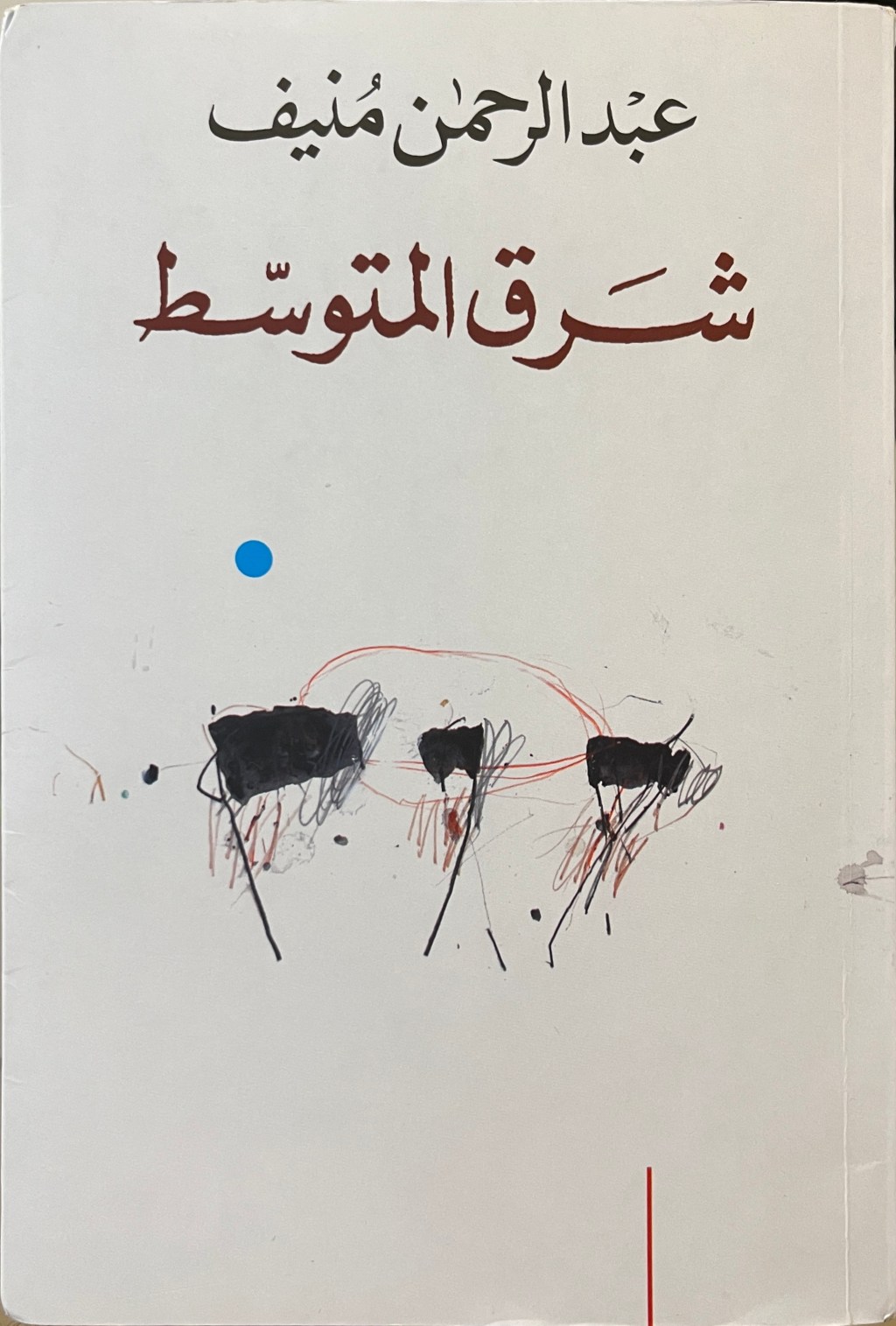
“ما فائدة الكلمة؟ مَن سيقرأها؟ حتى ولو قُرئت فما تأثيرها؟”
(“What’s the use of words? Who reads them? Even if they are read, what is their impact?”) ‘abd al-Raḥmān Munīf, Sharq al-mutawassiṭ: 235.
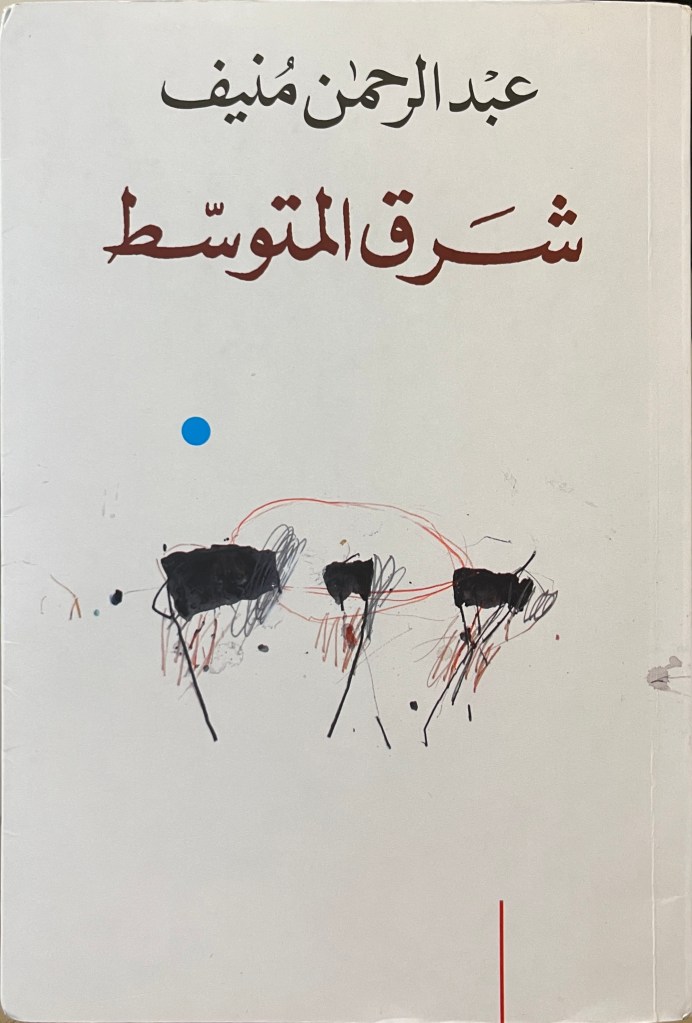
Rather than write anything about the overthrow of the Assad régime, I’m going to reflect on the fact that while Hay’āt taḥrīr al-Shām was converging on Damascus from Idlib and the newly captured Aleppo, I was in the midst of reading ‘abd al-Raḥmān Munīf’s (عبد الرحمن منيف) East of the Mediterranean (شرق المتوسط).
Munīf is often presented in popular scholarship as a Saudi author. This feels slightly disingenuous. He was born to an Iraqi mother and a Saudi father in Amman, Jordan in 1933. He spent his very early years traveling between his father’s hometown near Buraydah, Saudi Arabia, and Amman, but his father died shortly after his birth and thereafter his left was spent outside of KSA. Munīf completed schooling in Amman, then began law school in Baghdad, Iraq. Kicked out of Iraq for his Baathist leanings and his opposition to the Baghdad Pact in 1955, he fled to Cairo and then Belgrade, Yugoslavia (now Serbia) in 1958, where he was awarded a PhD in 1961 for his research on oil economies. He bounced around after this: Damascus after 1962, working for the state oil company; Beirut from 1973, working at the magazine البلاغ; back to Baghdad as a journalist in 1975 for the magazine النفط والتنمية; France in 1981, after the outbreak of the Iran-Iraq War; and then finally between Damascus-Beirut again from 1986 until his death in 2004.
This brief biography is, of course, based on various sources, including biographical details added to re-editions of his novels, and online sources such as al-Maarefa (above), the Riyadh Review of Books and on the Katara Prize for the Arabic Novel site. But you can also find plenty of other details about him thanks to obituaries that appeared in the New York Times (paywall); in The New Left Review, by Professor Sabry Hafez; Al-Jazeera English; and The Yemen Times by Eyad N. Al-Samman. There are undoubtedly many others, as well commemorative pieces, such as in Arab World Books, Esquire Middle East by William Mullally; and الجزيرة نت. Among the most comprehensive looks is a special issue of the MIT Electronic Journal of Middle East Studies that appeared in 2007. Have as much fun as I have with a Google search and I’m sure you’ll uncover more.
The above, perhaps overly long, biographical sketch should help to explain why it feels incomplete to call Munīf a Saudi writer. While he did have Saudi citizenship for part of his life thanks to his Saudi father, Iraqi culture and society was undoubtedly far more present through much of his lived experience. I have not been able to find a clear description of what he did inside the Kingdom’s borders, although the al-Maarefa site does have a detailed account of his relations with Saudi royals and government officials in the 1990s and last years before his death.
Perhaps this is why literary critic and Oxford lecturer Muhammad Mustafa Badawi calls him an author “from Iraq,” alongside Palestinian Jabrā Ibrāhīm Jabrā, in his 1992 article ‘Two Novelists from Iraq: Jabrā and Munīf’. Later studies, however, take a more nuanced approach to Munīf’s belonging and nationality. Dr. Sonja Mejcher-Atassi of the American University of Beirut and Guest Editor of the 2007 special edition of MITEJMES, in an insightful and exceptionally helpful chapter (‘Abd al-Rahman Munif: Tracing Alternative Stories East of the Mediterranean’) quotes Mona Anis’ obituary for the author in al-Ahrām, calling him “an Arab citizen par excellence.” The point of the chapter, though, is not so much Munīf’s contested nationality, but rather the situation of his literary oeuvre within a national or linguistic cannon. This is something that Mejcher-Atassi refuses, citing his lifelong work as a direct challenge to the rigid notions of literatures bound by Euro-Atlantic understandings of culture.
Indeed, Mejcher-Atassi, like Dr. Stephen G. Meyer of Siena Heights University in his The Experimental Arabic Novel, emphasizes the innovative and particular nature of Munīf, both in his person (and his particular approach to exile) and in his acculturation of the novel. Mejcher-Atassi explores in greater depth how the non-localization of Munīf’s novels (many take place in an unspecified Arab state) and language, as well as his own biography, make it difficult to categorize his home culture, and therefore his place within world literature. But both she and Meyer, and numerous other critics writing in both English and Arabic, highlight Munīf’s greatest contribution to creativity in his use of literary devices from storytellers. Together with biting sarcasm and wit, and clear elements of Arab settings and social relationships, they point to his ability to revolutionize the novel as a genre in service of modernist Arab expression.
Like many Anglophone readers, I came to Munīf’s work through Cities of Salt (مدن الملح), the first of his Cities of Salt Quintet and of the three novels of his (all from the quintet) translated into English. It’s easy to see why Cities of Salt captures readers’ attention and imagination. Munīf’s scorching depiction of American and European oil men, businessmen, diplomats and explorers are clear examples of his descriptive genius. But the way in which the story is told, the interplay of the almost-folksy storyteller-narrator along with the sharp insight into oil production, produced in me the same sense of excitement and alienation I felt when I first encountered Latin American magical realism.
This is why Sharq al-mutawassiṭ felt so surprising. For the reader who approaches Munīf through Cities, the expectation builds of other stories rife with sarcasm and dry humour. This cannot be said of Sharq, where the word السخرية (mockery, irony) appears frequently, but the concept itself is rarely on display. Sharq tells the story of Rajab Ibrāhīm, a political prisoner who, at the start of the novel, signs a document denouncing his political activities to gain a release from incarceration; a release made necessary by his rapidly deteriorating health condition. The story has two-and-a-half main characters: Rajab; his sister Anīsah; and (the half-character) Ashīlūs (Aeschylus), the ship to whom Rajab frequently addresses his memories and musings. There are plenty of others, including Rajab’s brother-in-law Ḥāmid; his now-deceased mother; his fellow inmates; French doctors; ‘abd al-Ghafūr, his Parisian acquaintance; and, of course, his jailers and torturers.
Sharq is usually included in the “genre of the prison novel,” as Dr. Geula Elimelekh makes clear in various articles, including her ‘Existentialism in the Works of ‘abd al-Raḥmān Munīf.’ Here, Elimelekh, locates Munīf’s novel(s) within the broader philosophical stream of Arab Existentialist writing, identifying the strong strains of alienation, futility and commitment that run through the works. Indeed, they feature heavily in Sharq: Rajab’s alienation is not just from his home, through exile, but from his mother (who dies before his release); from his sister, to whom he cannot externalize the horrors of his internal world; from the other passengers on the ship, from whose singing and socializing he abstains; and from his fellow political prisoners, and the committed at large, as he is haunted by his ‘fall’ (‘سقوطي’), the signature he places on the confession underpinning his release.
The linkages with French Existentialist thought are blunt at times, as it is in Paris and Marseilles that Rajab meets two feasible solutions, once he discards the possibility of suicide. One is ‘abd al-Ghafūr’s acceptance of apolitical exile, his abandonment of what is East of the Mediterranean for the opportunities afforded by French culture. The other is Dr. Vallé (دكتور فالي), who has himself faced torture and the brutal loss of his own family during the Second World War. Vallé is the one person to whom Rajab can confide, albeit impartially, as he buries the details of his confession for fear of being branded a traitor or a coward; an un-man. It is Vallé who tells Rajab that the only thing he has is his “hatred, spite” (‘حقد’), a rage that should guide him in his fight for the rest of his days. Rajab has spent weeks, even months, trying to put writing to use in exacting vengeance for the cruelty and inhumanity of his jailers. It is the anger and hatred he feels, however, that propel him towards his tragic end.
Indeed, Rajab’s struggle is with the futility of his words. In contemplating the brutal, humiliating death of an honest and pure newspaper seller, Amīn, he asks himself, or Ashīlūs, “Can words do anything? Would they make them [the torturers] afraid?” (‘هل تستطيع الكلمات ان تفعل شيئاً؟ هل تخيفهم؟’). The quote at the start of this post, from close to the end of the novel, makes clear that Rajab has nuanced his view. It is not words in general whose efficacy should be questioned, but the reactions of those who hear them. Action must accompany them for ideas to become reality. As Wā’il al-Ḥanāwī remarks in a 2018 article in AlJazeera.net’s al-Maydān literary section, Sharq is Munīf’s means of redeeming the power of words through Rajab’s mouth.
This is a fight borne by both Rajab and his sister Anīsah, whose role in the novel is no bit part. In fact, the lives of the women who populate the book act as a fascinating mirror that Munīf holds up to Rajab’s internal turmoil. As Mejcher-Atassi points out, the author was keen for his works to act as a catalyst for liberation, and Sharq “foregrounds writing as a tool for change, as engaged in the making of a better, more humane world” (‘Abd al-Rahman Munif: Tracing Alternative Stories East of the Mediterranean’: 1). The siblings’ mother is clearly a woman of action, violently opposing the arrest of her son when the security forces first arrive at their house; taking food and essentials to him at prison; organizing other mothers and sisters of prisoners in protests against the arrests and torture. Her commitment is contrasted by that of Hudá, Rajab’s paramour who eventually deserts him for another man. But the mother’s actions, although they do bring much comfort and some respite to Rajab, fail to force the system’s hand, as she dies before Rajab is released.
Anīsah, in contrast, is exemplary of the quiescence implied by ‘abd al-Ghafūr. She urges Rajab to give up his political stances, to focus on the daily struggle for existence and the enjoyment of the banal. She fears the impact of Rajab’s imprisonment, exile, and re-imprisonment upon return on her husband Ḥāmid’s behaviour and status. But she eventually realizes the importance of both words and actions in all aspects of life. She rues her and her brother’s inability to breach the wall of silence between them, and the wasted opportunity to erase his alienation and estrangement. She comes to understand that documentation and commemoration through words are important parts of retaining one’s individuality, connections and past. And she is tormented by the ultimate futility of submission, as Rajab is arrested and tortured after he returns, ending with the loss of his sight and then death. Anīsah eventually atones for this, trading her passivity for active engagement, but Munīf makes sure to highlight that no struggle has a quick solution.
I’ve given you plenty of words up to now, so perhaps I should look to wrap this up. And to do so, I’ll come back to my original thoughts that there was something different in reading this around the fall of Assad’s regime. Munīf’s novel has obviously provided much food for thought around commitment and engagement. These are, perhaps, not at the top of everyone’s mind between Israeli bombardments; reports of sectarian violence; and the overwhelming task of rebuilding a state and an economy racked by more than a decade of civil war and sanctions, and a half-century of brutal dictatorship. But Sharq al-mutawassiṭ has also brought to the fore the mammoth work of engaging with the emotional and psychological toll of the last fifty years. One Rajab, one Anīsah can be heroes. What happens when millions of Rajabs and Anīsahs need care and comfort and release and a path forward?
Sharq lays bare the horrors of torture and its physical and emotional impact on those who suffer it and their loved ones. As al-Ḥanāwī notes, the novel is more about the imprisoned than it is about the prison. But it also demonstrates how a state that permits and nurtures torture can radically reshape a country’s social fabric. Its poison penetrates right down to familial relations, inhibiting the blossoming and growth of healthy couples, families, neighbourhoods and communities. Ṣaydnāyā Prison might have been emptied of its inmates, but how do you open the prison gates in people’s hearts and minds? And, once you do, how do you help channel that anger away from destruction?
I read a 2023 reprint of Sharq that included Munīf’s introductory essay for the 12th edition of the novel, dated January 1998. In it, he noted that after 25 years since he penned the book, “people around all seas face an enemy who imagines that force, and force alone, can solve all problems, and that all people, wherever they are, should become slaves once again, that they obey and imitate all that one might wish to impose upon them.” (“بعد ربع قرن، فإنَّ ما يواجه الناس على أحواض كل البحار، عدو يتصور ان القوة، والقوة وحدها، يمكن ان تحل جميع المشاكل، وعلى الناس في كل مكان ان يتحولوا إلى عبيد مرة أخرى، ان يطيعوا ويمتثلوا لكل ما يراد ان يفرض عليهم”) It is not hard to extend this warning 27 years into the future, and especially to the current situation in West Asia. I won’t spoil the end of Sharq, as I hope that this post will enhttps://en.wikipedia.org/wiki/World_literaturecourage you to read it. Maybe even translate it. What I will say is that the ultimate belief in individual will and a commitment to the humanity and enduring memory of one another helps keep Munīf’s work from ending on a bleak note. It is truly through this commitment that we can throw off the shackles imposed upon us, and show that compassion, not force, is the solution to our problems.
 From Altay to Yughur
Leave a comment